
Top Communication Skills Kids Need to Succeed in an AI-Driven Future
Published: April 1, 2026
Introduction
Here is the paradox every parent is living through right now. AI is handling more tasks than ever, and yet the skill that matters most for your child's future is deeply, irreversibly human. Communication.
A 2024 BrightCHAMPS survey found that 38% of European parents believe effective communication will be the single most important skill for the next decade. Not coding. Not math. Communication.
The reason is straightforward. AI is getting better at data, calculations, and routine tasks. What it cannot do is connect with people, read a room, or speak with genuine empathy. The kids who can do those things will always have an edge.
ZetaGalaxy is built around this reality. Through interactive games, original songs, and AI-powered avatars, it gives kids the speaking practice they need to become confident, capable communicators. This guide covers the six skills that matter most and shows you exactly how to build them at home.
Why Communication Skills Matter More in an AI World
US teens now average 7 hours and 22 minutes of screen time every day. Most of that is passive. Scrolling, watching, consuming. Very little of it builds the ability to speak clearly, listen actively, or connect with another person.
That gap matters. As AI takes over routine cognitive tasks, the skills that set people apart are the ones machines can't replicate. Self-awareness. Empathy. The ability to explain your thinking to someone else.
The ISTE and ASCD framework for AI-ready learners makes this explicit. Being prepared for an AI-driven future means knowing how to use AI as a thinking partner, not just a search engine. That requires communication at every step.
What does that look like in practice?
- Using AI to brainstorm ideas and then communicating those ideas clearly to a teacher or peer
- Verifying information from AI sources and explaining why a source is or isn't trustworthy
- Asking precise questions to get useful answers from AI tools
- Translating complex information into language that others can understand
None of that works without strong communication. AI is the tool. Communication is what makes the tool useful.
6 Essential Communication Skills Every Kid Needs (Backed by Research)
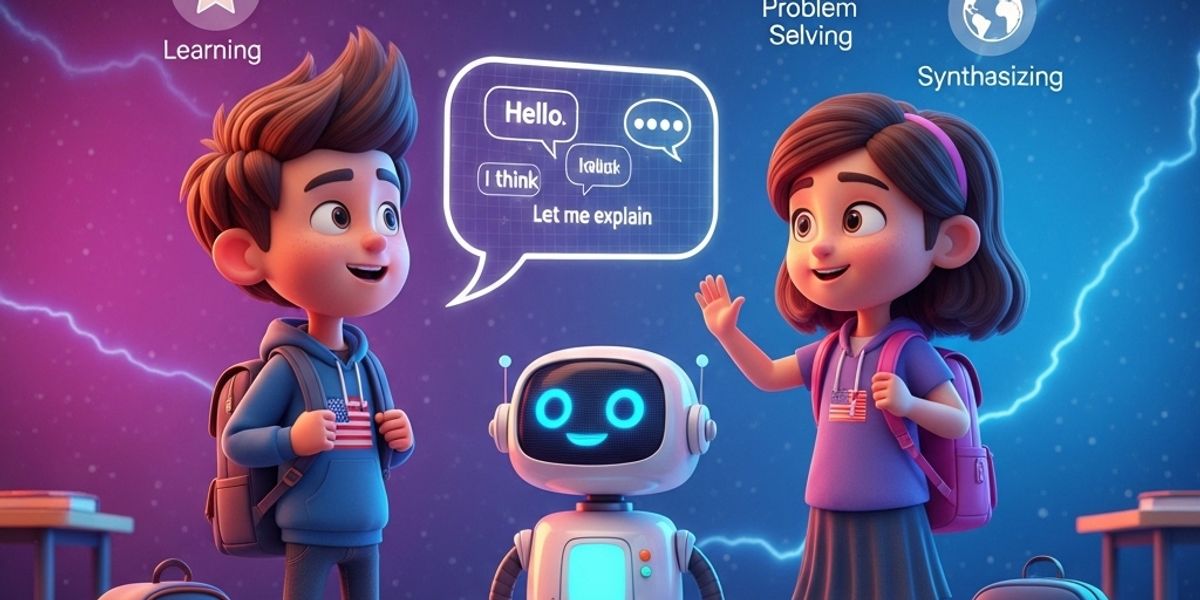
The ISTE and ASCD AI-ready profile identifies six roles that children need to grow into. Each one is built on communication. Here is what they look like in real life.
- Learner: A child who gets stuck on a project uses AI to ask the right questions and get unstuck. This requires knowing how to articulate the problem clearly. A vague question gets a vague answer. A precise question gets a useful one. Kids who can communicate what they don't understand learn faster.
- Problem Solver: When a child uses AI to brainstorm solutions for a school project or a real-life challenge, they need to evaluate the suggestions and explain their choices. That evaluation is verbal, social, and deeply human. It happens in conversations with parents, teachers, and classmates.
- Researcher: Kids who can verify information are more valuable than those who simply accept it. But verification is only useful when a child can communicate what they found and why it matters. Research without explanation is just data.
- Connector: AI tools can translate languages and help people communicate across barriers. But it takes a child with empathy and genuine curiosity to actually connect with someone from a different background. That quality is built through practice, not just exposure.
- Storyteller: The ability to communicate through different formats, speech, writing, images, and video, is one of the most in-demand skills of the next decade. Kids who can tell a story, hold attention, and make a point clearly will stand out in every field.
- Synthesizer: Taking complex information and presenting it in a way that others can understand requires both comprehension and communication working together. A child who can synthesize is a child who can lead.
Researchers consistently point to self-awareness and empathy as the foundation beneath all six. A child who understands their own thinking and genuinely considers how others feel will use AI thoughtfully rather than carelessly. Those qualities don't develop on their own. They need practice.
How Games and Interactive Play Build Real Communication Confidence
Most kids don't avoid speaking because they lack words. They avoid it because they're afraid of getting it wrong in front of someone who will notice.
Games fix that. When a child is playing, mistakes are part of the experience. There's no audience waiting to judge. There's just the next move.
Research from QuesTale shows that games combining AI-generated stories help children build communication and cooperation skills naturally. Kids who play these games don't feel like they're in a lesson. They feel like they're in an adventure. The language learning happens because they're invested in what comes next.
ZetaGalaxy's avatars take this further. When your child speaks to an avatar, they're getting real conversation practice in an environment where nothing bad happens if they stumble. The avatar doesn't sigh. It doesn't rush. It waits, responds, and keeps going.
That matters more than most parents realize. Tools like Buddy, the AI companion, are specifically designed to build confidence and empathy through conversation. The child isn't just learning words. They're learning how conversation feels when it goes well.
What games offer that drills never can:
- Immediate feedback: Kids find out instantly whether their response worked, which speeds up learning dramatically
- Natural repetition: A child will repeat a phrase ten times inside a game without ever feeling like they're drilling it
- Low stakes: The absence of social pressure lets kids take risks with new words and longer sentences
- Real motivation: Earning points, unlocking levels, and customizing avatars keeps kids coming back willingly
- Emotional connection: Story-based games create moments kids remember, and those emotional hooks make vocabulary stick
A child who spends 15 minutes a day in conversation with a ZetaGalaxy avatar is getting more real speaking practice than most kids get in an entire school week. That consistency compounds quickly.
From Practice to Real-World Success: Skills That Transfer
Parents sometimes wonder whether talking to an AI avatar actually carries over into real life. It does. Here is why.
When a child has a conversation with an avatar, they are not just saying words. They are responding to what they hear, adjusting their tone, and figuring out how to make themselves understood. Those are the same skills they use at school, at home, and eventually at work.
The specific skills that transfer:
- Active listening: To respond to an avatar's question correctly, a child has to actually hear it. This trains the habit of listening to understand, not just waiting for a turn to speak.
- Clarity: When a child wants the avatar to understand them, they learn quickly that mumbling and vague answers don't work. They start to articulate thoughts more precisely.
- Emotional intelligence: Different avatars have different personalities. A child who adapts their communication style to different characters is developing real social intelligence.
- Adaptability: Switching between a serious scenario and a playful one teaches kids to read context and adjust accordingly.
The Second Step research program found that direct instruction in human skills improves academic motivation and reduces disciplinary issues in school. When kids feel confident communicating, they participate more, ask better questions, and engage more fully with learning.
Conversation-style practice that feels like real-life speaking is exactly what builds genuine confidence. Not scripts. Not memorized phrases. Real back-and-forth that requires a child to think on their feet.
How ZetaGalaxy Makes Communication Practice Fun and Effective
ZetaGalaxy was designed with one question in mind: what would make a child want to practice speaking every single day?
The answer was not more worksheets or vocabulary lists. It was a world kids actually want to spend time in.
Here is how the app builds each communication skill:
- Multiple avatars with different personalities: Each avatar behaves differently. One is curious and asks lots of questions. Another is playful and keeps things light. A third is calm and thoughtful. Switching between them teaches kids to adapt their communication style, which is exactly what emotional intelligence looks like in practice.
- Game-based speaking activities with gentle feedback: When a child mispronounces a word or gives an unclear answer, the app responds with soft correction rather than a buzzer and a red screen. Research consistently shows that gentle feedback builds confidence while harsh correction shuts kids down. ZetaGalaxy always keeps the conversation going.
- Songs and stories that reinforce vocabulary naturally: A child who sings a ZetaGalaxy song about asking for help absorbs the phrase structure through melody and repetition. By the time they need that phrase in real life, it already feels familiar.
The app is ad-free and designed to be safe for young children. AI voice interaction, when it's built well, gives kids an always-available practice partner that never loses patience. That consistency is what makes the difference over time.
A Parent's Guide: Building Communication Skills at Home
You don't need a lesson plan. You need a few good habits.
Research is clear that short, consistent practice beats long, infrequent sessions every time. Ten minutes a day builds real skill. An hour once a week mostly builds fatigue.
Practical things you can do starting today:
- Set a 10-minute daily practice window: Morning before school or evening after dinner both work. Consistency matters more than timing.
- Ask open-ended questions at dinner: Not just how was your day but what was something that surprised you today or what would you have done differently. These questions build the habit of thinking out loud.
- Model active listening yourself: When your child is talking, put your phone down. Make eye contact. Ask a follow-up question. Kids copy what they see far more than what they're told.
- Celebrate effort, not perfection: When your child tries a new word or speaks up when they normally wouldn't, notice it. Praise the attempt, not just the result.
- Let them lead avatar conversations: Resist the urge to guide. When a child chooses what to say and how to say it without prompting, that's where real confidence builds.
Use ZetaGalaxy's progress tracking together: Check the dashboard with your child. Point out how many sentences they've spoken this week. Celebrating numbers makes the habit feel worth keeping.
Kids learn best when real family interaction and tech tools work together. Neither one alone is enough. Together, they build something lasting.
Conclusion
AI isn't making communication skills less important. It's making them more valuable than ever. The kids who will thrive are the ones who can think clearly, speak confidently, listen with genuine attention, and connect with other people in ways no machine can replicate.
Games and interactive avatars create the safe, engaging environment kids need to build those skills without pressure. ZetaGalaxy brings research-backed approaches together with real play so that practice happens every day, not just when someone reminds them to.
Start small. Ten minutes today. The confidence your child builds now will carry them further than any algorithm ever could.
Frequently Asked Questions
Q: At what age should children start developing communication skills for an AI-driven future?
A: Ages 4 to 8 are ideal for building foundational skills. Early exposure builds confidence naturally. ZetaGalaxy is designed for young learners with age-appropriate avatars and games that make speaking practice feel like play from the very first session.
Q: Will AI replace the need for human communication skills?
A: No. AI makes human skills more valuable, not less. Machines can't replicate empathy, read social cues, or form genuine connections. The most successful future professionals will combine tech fluency with strong, confident communication.
Q: How much screen time for communication practice is appropriate?
A: Quality matters more than quantity. Short, focused sessions of 10 to 15 minutes daily are more effective than longer ones. ZetaGalaxy's game-based approach makes every minute count without slipping into passive consumption.
Q: Can talking to AI avatars really improve real-world communication?
A: Yes. Avatars provide a safe practice environment where kids build confidence through repetition and gentle feedback. Skills like active listening, clarity, and adaptability develop through avatar conversations and transfer directly into real human interactions.
Q: What is the difference between ZetaGalaxy and other language apps?
A: ZetaGalaxy focuses on conversational speaking with diverse avatars, combining games, songs, and AI interaction. It builds communication skills, not just vocabulary, with a consistent emphasis on confidence through real dialogue rather than passive exercises.