
How Kids Learn Spoken English Fast Using AI-Powered Games
Published: March 27, 2026
You want your child to speak English with confidence. But getting them to practice out loud? That's the hard part. Kids resist worksheets. They tune out when you try to drill vocabulary. Traditional methods push reading and writing, but speaking gets left behind.
What if learning English felt like play?
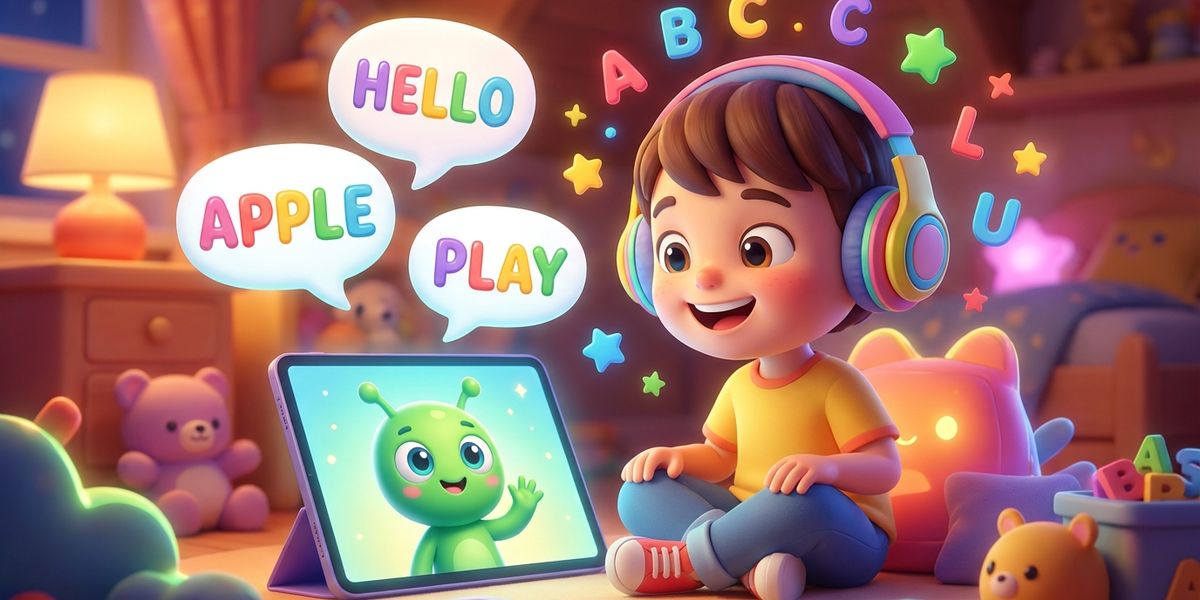
AI-powered games are changing how kids learn spoken English. Instead of memorizing words from a screen, children talk to characters that listen, respond, and encourage them. Kids practice without feeling like they're studying.
More than 500,000 children now use AI speaking tools every month. Parents report kids picking up 60 new words weekly. The games work because they turn awkward practice into fun conversations. This guide covers how these tools work, why they outperform traditional methods, and how to pick the right one for your child.
Why Traditional Methods Fail at Teaching Speaking
Most language apps focus on reading and listening. Your kid taps a picture, hears a word, maybe repeats it once. That's passive learning. Speaking requires active practice, and kids won't do it if it feels like work.
AI games fix this by turning speaking into a game mechanic. To earn points, your child has to speak out loud. To reach the next level, they need to pronounce words correctly. The app gives instant feedback, so they adjust and try again.
Here's what traditional methods miss:
- Worksheets: Kids fill in blanks but never open their mouths.
- Flashcards: Build vocabulary recognition, not speaking fluency.
- Group classes: Kids get nervous and stay quiet.
- Standard apps: Focus on reading comprehension, not real voice interaction.
AI games offer something different. Real voice interaction means the app understands what your child actually says. Immediate feedback replaces waiting for a teacher to correct pronunciation. Characters never judge, so kids feel safe making mistakes. And games keep children engaged 3 to 5 times longer than any workbook.
When children enjoy the activity, they repeat it. Repetition builds fluency. That's the simple formula AI games follow.
The Science Behind Voice-Based AI Learning for Kids
Speech recognition technology has improved dramatically. Modern systems now adapt to children's voices, which sound different from adult voices. Higher pitch, varied pace, and occasional mumbling no longer confuse the software.
Companies like ZetaGalaxy build their curricula with experts in education science and child psychology. The goal is to match how kids naturally learn language.
The approach follows four pillars:
- Speaking: Kids produce sounds and sentences out loud.
- Listening: They hear correct pronunciation from native-like voices.
- Reading: Words appear on screen to connect sound to text.
- Writing: Some games include tracing or typing activities.
These pillars reinforce each other. A child who says "apple" and sees the word remembers it faster than one who only hears it.
The scope of these programmes goes deep. Some platforms offer access to 15,000 vocabulary words and 150,000 contextual sentences. That's enough material to cover years of learning, all delivered through short daily sessions that kids actually want to do.
How Gamification Accelerates English Speaking Confidence
Gamification works for a simple reason: kids like earning things. Points, badges, and level-ups give clear goals. Each correct pronunciation adds to a score. Each new word opens a new story or character.
Platforms with strong gamification have collected more than 470,000 five-star reviews. Parents didn't just approve of the content. They saw their children begging to practice English.
AI characters play a big role in this. Instead of practicing with a screen that feels impersonal, kids talk to friendly avatars. A dragon, a robot, or a cartoon friend asks questions and reacts to their answers.
Here's how the mechanics work:
- Interactive stories: Kids speak lines to advance the plot.
- Speaking challenges: The app prompts "What's your favourite colour?" and listens for a real response.
- Progress tracking: Parents see exactly which words and phrases their child has mastered.
- Reward systems: Completing lessons earns virtual coins or opens new content.
These elements turn a daunting task into something children initiate on their own. Parents stop nagging. Kids start playing. And while they play, they learn.
Real Results: What Research Shows About AI Language Games
Numbers matter to parents. You want proof before committing time and money to a new app. Research and real-world data both point in the same direction: AI speaking games deliver measurable results.
Weekly vocabulary gains average 60 new words for regular users. That's more than many classroom settings achieve in a full month. Kids practice more often and get corrections in real time, which is why the numbers hold up.
Schools have noticed. Over 2,000 institutions now trust AI language platforms to supplement classroom instruction. Teachers use them for English language learners and native speakers who need extra support.
Growth numbers tell the story too. Emerging platforms report 25% monthly active user increases. Word spreads fast when parents see results.
Teacher dashboards add another layer of value. Educators can track individual student progress, spot gaps in pronunciation, and adjust instruction accordingly. For parents, these same dashboards offer visibility into exactly what their child is learning. No more guessing whether screen time is doing anything useful.
My 7-year-old went from refusing to speak English at home to asking Alexa questions in English. The game gave him confidence I couldn't teach.
Stories like this repeat across the US, UK, and Australia, and in non-English speaking countries where families want their children to gain fluency.
Choosing the Right AI Speaking Game for Your Child
Not all apps are created equal. Some prioritise vocabulary while others focus on full sentences. Here's what to look for before downloading anything.
Age appropriateness. Apps typically serve either 3 to 8 year olds or 6 to 12 year olds. Choose based on your child's developmental stage, not just their grade level.
Curriculum alignment. Does the programme follow recognised language learning frameworks? Look for mention of Cambridge, CEFR, or national education standards relevant to your country.
Privacy features. COPPA compliance is non-negotiable. Premium platforms process voice data on the device itself, so recordings never leave your home. Skip apps that sell data or display third-party ads.
Language support for non-native speakers. If English isn't your family's first language, find apps offering localisation. Top platforms support 8 or more languages including Spanish, French, Mandarin, and Arabic. Instructions appear in the parent's language while kids practice English.
Offline access. Reliable internet isn't always available. Apps that let you download lessons for offline use keep learning going during travel or when the connection drops.
Ad-free environment. Free apps often interrupt learning with ads. Premium subscriptions cost money but remove distractions and keep the experience safe.
Take advantage of free trials. Let your child play for a few days. If they're excited to return, you've found a good fit.
Maximising Learning: ZetaGalaxy's Approach to Spoken English
ZetaGalaxy combines three elements parents want: songs, games, and conversations with AI avatars. The mix keeps children engaged across different learning styles.
Songs embed vocabulary into catchy tunes. Kids memorise lyrics without realising they're studying. Games add structure and clear goals. AI avatars create the kind of back-and-forth conversation that builds real speaking skills.
What makes ZetaGalaxy different is the avatar variety. Your child can practice English with a friendly alien, a curious scientist, or a playful animal. Different characters ask different questions, so kids learn to respond in varied contexts.
This matters because real life isn't scripted. Children need to speak with relatives, teachers, and friends. Practicing with multiple avatars prepares them for unpredictable conversations they can't rehearse in advance.
The platform tracks progress across speaking, listening, and comprehension. Parents receive updates showing which areas need attention. That kind of visibility makes it easy to know whether your child is actually moving forward or just clocking screen time.
Frequently Asked Questions
What age is best for kids to start using AI-powered English learning games?
Most apps target ages 3 to 12 with content tailored to each stage. Start when your child shows interest in interactive play and can speak in short phrases. Earlier is generally better for accent acquisition.
How much screen time should kids spend on language learning games?
15 to 20 minutes daily works best. Quality matters more than quantity. Short, focused sessions with active speaking produce better results than long stretches of passive watching.
Can AI games help children who don't speak English at home?
Yes. Top apps offer localisation in 8 or more languages including Spanish, Arabic, French, and Mandarin. They're designed specifically for ESL and ELD students learning English as a second language.
Are AI-powered English learning apps safe for children?
Leading apps follow COPPA guidelines, show no ads, and comply with Google Play Families policies. Premium platforms process voice data on the device and never share recordings with third parties.
How quickly will I see results from AI speaking games?
Most children show improved vocabulary within 2 to 4 weeks of regular use. Parent dashboards and weekly reports let you track progress in real time so you're never guessing.