
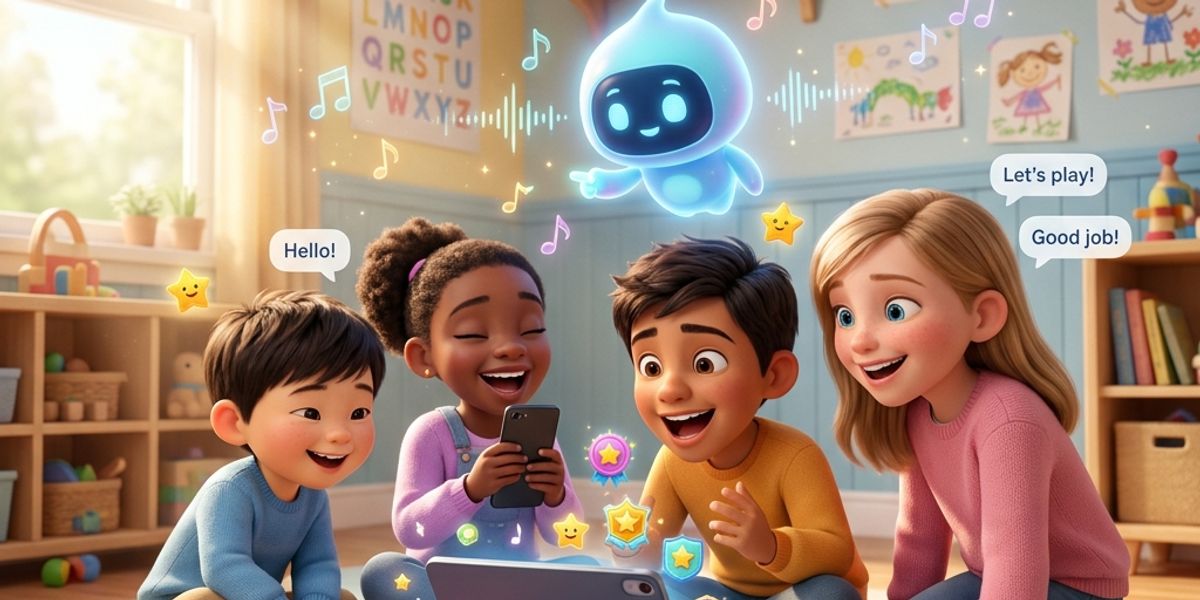
English Games and Songs for Kids: Boost Speaking with AI
Published: March 20, 2026
Introduction
Learning English doesn't have to feel like work. For kids, the fastest path to fluency runs straight through fun. When a child is laughing, singing, or pretending to be a character in a story, their brain quietly builds vocabulary, absorbs grammar, and sharpens pronunciation without any pressure.
Games, songs, and AI-powered conversations are changing how children across India engage with English. Whether your child is just starting out or already comfortable with the basics, these methods keep practice exciting and consistent.
Kids who learn through play speak more, remember more, and enjoy the process far more than those sitting through textbook drills. Zetagalaxy is built around exactly this idea. The right mix of play, music, and smart technology turns English learning into something children actually look forward to every day.
Why Games Are Effective for Learning English
There's a reason children in Indian schools often remember playground rhymes long after they've forgotten textbook chapters. Play creates emotional connections to information. When learning happens inside a game, the brain treats the experience as meaningful rather than routine, and that makes memory stick.
Games also create natural repetition. A child playing a word-matching game will encounter the same vocabulary multiple times without realising they're drilling it. That low-pressure repetition is exactly how language becomes automatic. The child isn't studying a word, they're using it.
Here's what consistent game-based English practice does for kids:
- Builds vocabulary naturally through context and repetition, not memorisation
- Keeps motivation high because the activity itself is the reward
- Encourages speaking without the fear of being judged or corrected harshly
- Develops listening skills alongside speaking skills in a balanced way
- Promotes problem-solving and quick thinking in English as a natural outcome
When you remove the pressure of tests and grades, children become fearless with language. That fearlessness is what produces real fluency.
Engaging English Game Types for Kids
Not all games teach the same skills. The best English learning apps and platforms mix different game formats so children practise multiple aspects of the language at once. Here's a look at the types that work best and what each one builds.
Storytelling Games: Children build or continue a story using given words or characters. This builds sentence formation, narrative thinking, and vocabulary in context. A child might be given a character like a space explorer and asked to describe their journey, using new words along the way.
Vocabulary Puzzles: Word searches, crosswords, and matching activities strengthen word recognition and spelling. These games work well for younger children who are still building their reading foundation in English.
Role-Play Scenarios: Children take on characters like a shopkeeper, a doctor, or a news reporter. These scenarios simulate real conversations and teach children how English is actually used in everyday life, which is especially useful for building practical speaking confidence.
Word Challenges: Timed games where kids name objects, complete sentences, or guess words from clues. The time pressure adds excitement and trains quick thinking in English.
Listening Games: Activities where children follow instructions, identify sounds, or respond to audio cues. These sharpen comprehension skills and train the ear to recognise natural English rhythm and accent.
ZetaGalaxy weaves all these formats into its learning environment so children get a well-rounded experience every session. No single game type carries all the weight.
Learning English Through Songs and Stories
Ask any adult what they remember from their early school years and most will mention a song. Music encodes language differently than regular speech. The melody acts as a memory hook, and the rhythm makes words feel natural in the mouth long before a child fully understands their meaning.
English nursery rhymes and songs teach pronunciation through repetition without making it feel like drilling. When children sing along to familiar tunes, they absorb sentence patterns, verb forms, and phonics without opening a single worksheet. The cadence of English, the way syllables rise and fall in natural speech, becomes familiar through music in a way that textbook reading simply can't replicate.
Storytelling works in a similar way. When a child is caught up in a story, listening to find out what happens next, they are processing English at full speed without consciously trying to. Good stories for young learners use accessible language, clear characters, and situations children relate to.
Many Indian parents find that their children pick up correct English intonation much faster through songs and audio stories than through classroom instruction alone. The two approaches work best in combination, and digital platforms make it easy to access both anytime.
AI Conversation Partners: Chatting with Avatars
One of the biggest barriers to speaking English is the fear of making mistakes in front of others. That fear stops many children from practising, which slows their progress. AI conversation avatars remove that barrier completely.
When a child chats with a friendly AI avatar, they know they won't be laughed at. They can take their time, try again, and experiment with words they're not sure about. That kind of low-stakes practice is incredibly valuable, particularly for children who are shy or who come from homes where English isn't the primary language.
Here's what makes AI conversation partners genuinely useful for young English learners:
- Available anytime: Practice isn't limited to school hours or tutor availability. A child can chat at any time that suits them.
- Voice recognition: The AI listens and responds to spoken English, which means children practise real pronunciation, not just reading and writing.
- Adaptive responses: The conversation adjusts to the child's level so it stays engaging without becoming frustrating or too easy.
- Instant feedback: Children hear immediately if their pronunciation needs adjustment, which speeds up improvement significantly.
- No judgement: The AI never sighs, rushes, or shows impatience. For children who struggle with confidence, this environment makes all the difference.
ZetaGalaxy's AI avatars are designed to feel like friendly characters, not cold software. Children don't feel like they're being assessed. They feel like they're having a chat, which is precisely what builds real speaking confidence over time.
Building Confidence and Skills Through Play
Confidence in a language grows through use. The more a child speaks English, even imperfectly, the more comfortable they become with it. Games and interactive activities provide hundreds of small speaking moments every session, each one reinforcing the belief that the child can do this.
There's also a social dimension worth noting. Many games, whether played with siblings, classmates, or through multiplayer formats online, involve turn-taking, negotiating, and expressing ideas to others. These are the same communication skills children need in classrooms, social settings, and eventually in the workplace.
The outcomes of regular game-based English learning include:
- Expanded vocabulary: Children encounter new words naturally and in meaningful situations, so the words stay with them.
- Improved pronunciation: Repeated exposure to correct spoken English through songs, AI responses, and audio-based games trains the ear and the voice.
- Stronger reading and writing: A child who knows a word by sound and context is far more likely to recognise and spell it correctly on paper.
- Better classroom performance: Children who practise English playfully tend to participate more actively in school and feel less anxious about speaking in front of the class.
- Greater independence: A child who has practised speaking through games starts to use English spontaneously, rather than only when asked. That shift marks real fluency.
Parents across India are seeing this shift in their children. A child who once froze when asked to speak English in public starts volunteering answers in class, chatting with relatives, and reading English story books for fun. Play is the engine behind that change, and platforms like Zetagalaxy provide the tools to make it happen every day.
Conclusion
Games, songs, and AI chats give children a path to English that feels natural. There's no pressure, no boredom, and no sense that learning is a chore. Each session builds real skills in vocabulary, pronunciation, listening, and speaking confidence.
If you're a parent looking for a way to give your child a genuine edge in English, interactive learning is worth trying. Zetagalaxy brings all these elements together in one place, making consistent English practice something your child will actually ask for.
Frequently Asked Questions
Q: How do games help children learn English?
A: Games make practice enjoyable by turning lessons into play. They reinforce vocabulary, grammar, and pronunciation through repetition and context. Interactive challenges keep kids engaged so they learn naturally and remember better. Games also encourage problem-solving and social interaction in English.
Q: What types of games improve kids' English speaking skills?
A: Storytelling activities, vocabulary puzzles, role-play scenarios, and word challenges all engage listening and speaking skills. Each format targets different abilities. Word puzzles build vocabulary while conversation games boost fluency. Playful formats keep motivation high and make learning enjoyable.
Q: Can singing songs really help kids speak English better?
A: Absolutely. Songs use melody and repetition, making new words and phrases easier to remember. Singing improves pronunciation, rhythm, and intonation. Kids learn naturally through music, building vocabulary and listening skills without realising it. Music makes learning memorable and fun.
Q: How do AI avatars help kids practise English?
A: AI avatars provide a safe, patient conversational partner for kids. They encourage speaking practice anytime and give instant feedback. These friendly bots use voice recognition and adapt to a child's level, making conversations engaging. For shy children, AI chats build the courage to speak up.
Q: How often should children play these educational games?
A: Consistent, short sessions work best. Aim for a few minutes every day or several times a week. Even 10 to 15 minutes of games, songs, or AI chats can build strong learning habits and confidence, as long as it stays fun and stress-free.