
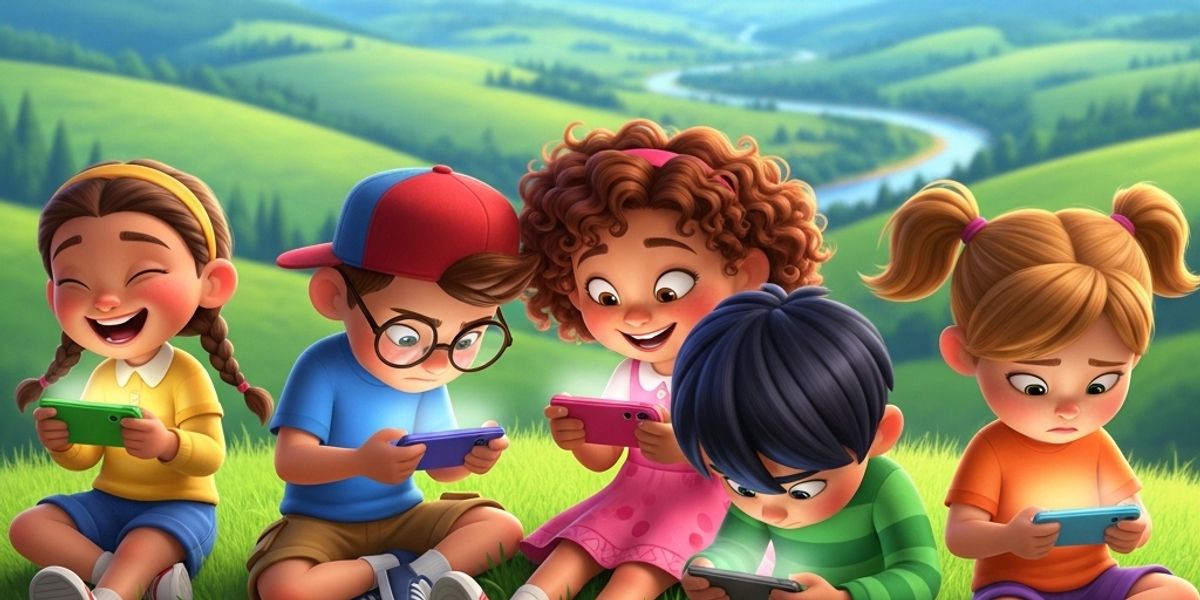
Educational Games for Kids: Boost Language Skills through Play
Published: March 15, 2026
Introduction
Kids don't like boring lessons. You already know that. Hand them a book full of grammar rules and they lose interest in minutes. Give them a game and suddenly they're focused, excited, and ready to go.
That's the magic of play-based learning. It turns practice into something children actually want to do. And when they enjoy something, they do it more often, without you having to push.
Games help children grow in so many ways. They sharpen thinking, build confidence, and make communication feel natural. For language learning, games carry even more weight. Kids speak without fear, pick up new words in context, and hold onto what they practise.
Parents across India want learning that feels natural, not forced. Educational games offer exactly that. They mix real fun with real outcomes. From building vocabulary to speaking with confidence, games support every stage of a child's development.
Why Games Matter for Child Development
Children learn best when they're involved. Passive learning doesn't hold their attention for long. Games keep kids active, thinking, and responding in real time.
When a child plays, their brain is busy. It's solving problems, making decisions, and recognising patterns. That mental activity builds skills that show up in school and in everyday life.
Games also create a safe space. Kids try, fail, and try again without feeling judged. That process builds confidence slowly, and it sticks.
Here's what regular game-based activity brings to a child's development:
- Better problem-solving through puzzles and challenges
- Stronger memory skills from recall activities and repetition
- Improved focus because games demand attention
- Growing confidence as kids hit small wins
- Social skills through group play and conversation
- Creative thinking when kids imagine stories or take on roles
Think about a simple guessing game. A child listens, thinks, and responds. That one loop trains the brain in multiple ways at once.
In many Indian homes, parents mix traditional games like word antakshari with modern apps. That combination keeps learning lively while staying rooted in culture.
Kids who learn through play tend to stay curious. Curiosity drives long-term learning better than any reward chart.
How Games Boost Kids' English Skills
Language learning needs practice. Not just reading, but speaking. That's where many children struggle. They know the words but hesitate to use them.
Games remove that hesitation.
When kids play, they're focused on the task in front of them. Speaking becomes part of the activity, not something separate to fear.
Games support English in specific ways:
- Vocabulary grows through repeated exposure to words in real context
- Speaking improves as kids answer questions or describe what they see
- Listening skills sharpen when following instructions
- Pronunciation gets better through repeated, low-pressure practice
- Here are some game formats that work well at home:
- Role-play games where kids act as shopkeepers, teachers, or doctors
- Question games that push quick, natural responses
- Picture description games that build sentence formation skills
- Story-based games where children create and extend their own narratives
A child playing a story game might say, "The boy is running in the park." That one sentence practises grammar, vocabulary, and confidence all at once.
The best part is that kids don't feel like they're studying. They're just playing. That's why regular practice happens without the usual resistance.
Types of Educational English Games
Not all games work the same way. Some focus on words, some on speaking, and others on creativity. Mixing different types keeps learning fresh and covers more ground.
Here are popular formats that work well for English:
- Vocabulary games where kids match words with pictures or clues
- Storytelling games where children build on prompts
- Quiz games that test understanding in a fun, low-stakes way
- Action games like charades that combine movement with language
- Digital apps that blend sound, visuals, and real interaction
You can also try these simple activities at home:
- Idiom charades where kids act out phrases like "raining cats and dogs"
- Story dice where each roll adds a new character or event
- Question circles where each child asks and someone else answers
- Describe and draw, where one child speaks and another draws what they hear
In Indian households, even daily routines can become language games. Ask your child to describe their school day in English. Make it a timed challenge. Keep it light. The goal is simple. Keep kids talking.
AI and Tech in Kids' Learning Games
Technology has changed what learning looks like. Today's apps go far beyond simple matching games. They interact, respond, and adjust to the child in front of them.
AI-based tools make learning personal. They adapt to a child's level and offer feedback the moment a mistake happens.
Picture a child speaking to a character on screen. The character listens, responds, and keeps the conversation going. That kind of interaction feels real. It's engaging in a way a worksheet never will be.
Modern learning apps include features like:
- Speech recognition that checks pronunciation in real time
- Instant feedback to gently correct mistakes
- Interactive avatars that hold actual back-and-forth conversations
- Adaptive levels that shift as the child's skills grow
- Visual and audio cues that make language input easier to absorb
Apps like ZetaGalaxy bring this to life for young learners. Kids talk to different avatars and practise real conversations. It feels like chatting with a friend, not sitting through a class.
Parents also value safety. The best apps avoid distractions and stay focused on learning goals, so you don't have to watch over every session.
With the right tools, children get more speaking practice in a week than traditional methods offer in a month.
Tips for Effective Game-Based Learning
Games work best with a little structure around them. Random screen time or switching between apps every few days won't produce results.
Start by choosing games that match your child's age and current skill level. Too easy and they get bored. Too difficult and they switch off.
Here are practical tips that actually work:
- Set a fixed playtime each day so it becomes a habit
- Mix offline games with digital ones so attention stays sharp
- Play alongside your child and guide them through new challenges
- Encourage speaking during games, not just clicking or tapping
- Celebrate small progress, a new word used correctly, a full sentence spoken with confidence
- Rotate games every week or two to keep things interesting
Across India, many families combine board games, storytelling sessions, and apps. That balance works well because no single format carries all the learning.
Talk to your child after a session. Ask what happened in the game. Ask what words they used. That short conversation reinforces everything they just practised.
Learning should feel natural.
Frequently Asked Questions
Q: How do educational games improve kids' language skills?
A: Games make learning active and fun. Children repeat words, respond to questions, and use language in real situations. This improves memory, builds vocabulary, and increases confidence in speaking over time.
Q: What age is best to start using learning games?
A: Children as young as three can start with simple word and sound games. As they grow, storytelling and quiz formats can be added. The key is matching the game to their current level.
Q: What should I look for in a good educational game?
A: Look for games that encourage speaking and thinking. They should include visuals, sounds, and real interaction. Content must suit your child's age and stay focused on learning without unnecessary distractions.
Q: How can parents balance screen time with educational gaming?
A: Set clear time limits and mix digital games with offline activities. Play with your child when you can, and talk about what they learned. This keeps screen time purposeful.
Q: Can kids really learn English through games alone?
A: Games build practice habits and speaking confidence. They work best alongside reading, conversations, and guidance from parents or teachers. Together, these methods support strong, lasting language development.