
Beyond Coding: Why Communication Is the #1 Skill Kids Need in the AI Era
Published: April 6, 2026
Table of Contents
- The Coding Myth: What AI Leaders Say Kids Really Need
- Game-Based Learning: The Science Behind Play That Builds Communication
- Beyond Textbooks: How Songs, Games, and AI Avatars Build Speaking Confidence
- Real Results: Evidence That Communication Games Transform Kids
- How to Choose the Right Communication-Building Tool for Your Child
- Frequently Asked Questions
Every parent wants to give their child a head start. For years, that meant signing them up for coding camps and STEM clubs. Coding felt like the answer to future-proofing a career. But AI is changing the equation fast, and the skills that matter most are shifting in ways most parents haven't considered yet.
The World Economic Forum projects that AI could displace around 90 million jobs globally. That's the headline most people stop at. But the fuller picture is more optimistic. The same report forecasts 170 million new roles will emerge, and they'll require skills that AI simply can't replicate. Communication tops that list.
At ZetaGalaxy, we believe the best way to build those skills isn't through drills or worksheets. It's through play. Games, songs, and AI avatars are proving to be powerful tools for building the communication confidence kids will carry into adulthood. Here's the research behind why.
The Coding Myth: What AI Leaders Say Kids Really Need
When the CEO of AWS speaks, the tech world listens. Matt Garman recently made headlines by stating that critical thinking, adaptability, and communication are "just as important, if not more important" than coding. Coming from someone leading one of the world's most powerful cloud platforms, that's a striking statement.
McKinsey's research maps this out in detail. Their framework of 56 critical skills for the future workforce places heavy emphasis on interpersonal abilities. The World Economic Forum's Future of Jobs report echoes this, placing soft skills at the center of what employers will need most over the next decade.
The three skills that AI consistently can't replicate:
- Communication: The ability to listen, articulate ideas, and connect meaningfully with others. This includes verbal fluency, storytelling, and the ability to read a room.
- Emotional intelligence: Understanding feelings, navigating conflict, building trust, and responding with empathy in ways no algorithm can match.
- Critical thinking: Questioning assumptions, weighing evidence, and making sound decisions with incomplete information.
Your child can learn to prompt an AI. But they also need to know how to lead a meeting, resolve a misunderstanding, or pitch an idea to someone who doesn't agree with them. That takes practice from an early age.
Game-Based Learning: The Science Behind Play That Builds Communication
Play isn't just fun. It's one of the most effective learning environments ever studied. And when it comes to communication skills specifically, the evidence is compelling.
A 2025 study published on Zenodo found that gamification significantly improved communicative competence among learners. Students who engaged in game-based activities showed measurable gains in verbal interaction, not just vocabulary retention. The games created real reasons to speak, to ask questions, and to respond.
Research published in the Journal UNY specifically tested Wordwall digital games on students' communication skills. The results showed improved speaking confidence and active participation. Students who had been reluctant speakers began engaging with enthusiasm once the learning felt like a game.
Barton et al. (2018) and Anzman-Frasca et al. (2020) both found that games with structured rules are particularly effective at promoting verbal expression. When a child is playing a game with clear objectives, they naturally start talking. Negotiating, questioning, and explaining are built right into the experience.
What this tells us:
- Games create authentic speaking opportunities, not just scripted repetition.
- Immediate feedback within games builds self-correction habits, which are essential for language fluency.
- Structured play with rules drives verbal interaction more reliably than open-ended creative tasks for younger learners.
Beyond Textbooks: How Songs, Games, and AI Avatars Build Speaking Confidence
Ask a child to speak English in front of their class and you'll often see them freeze. Ask them to speak to a friendly animated avatar in a game they enjoy, and the conversation flows. That's not a coincidence. It's anxiety reduction in action.
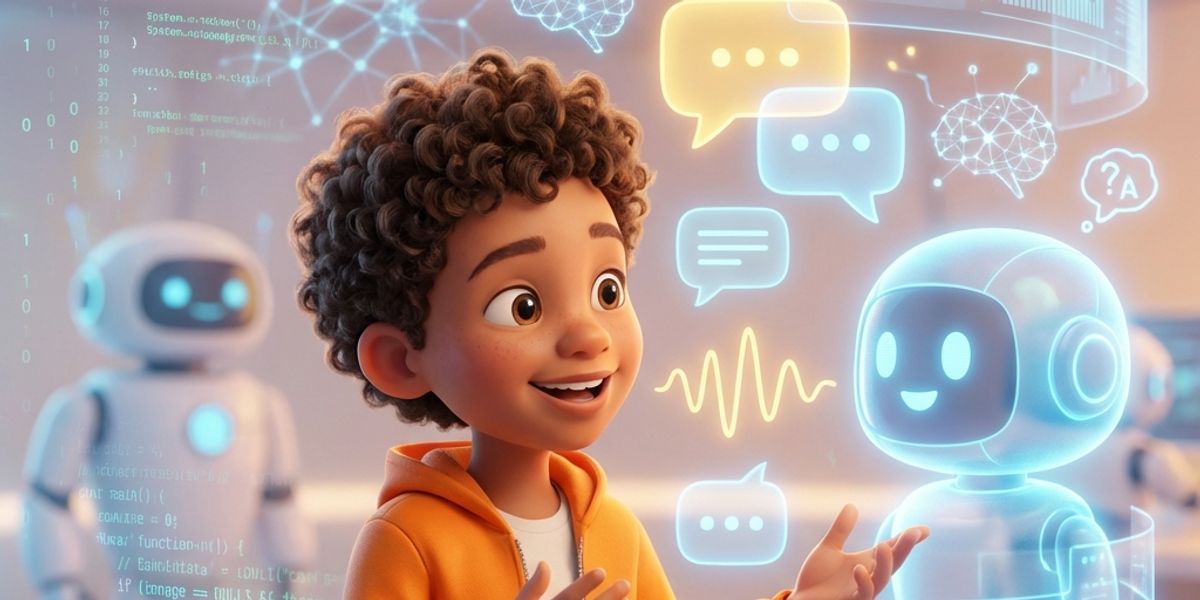
At ZetaGalaxy, kids practice English by talking to diverse AI avatars through interactive games and songs. The avatars are designed to feel approachable, patient, and responsive. There's no judgment, no awkward silence, and no fear of getting laughed at. Kids repeat phrases, respond to prompts, and sing along. Over time, they stop thinking about the language and start using it.
The market data proves parents are hungry for this. Buddy.ai has reached 55 million downloads, showing just how much demand exists for AI-powered language practice for children. Talkie Robie hit 25,000 downloads and continues to grow at 25% month over month in active users. These aren't niche products. They're solving a real gap between how kids are being taught to communicate and what they actually need.
Why this approach works:
- Low-pressure environments reduce speaking anxiety, especially for children learning English as a second language.
- Songs reinforce pronunciation patterns through repetition that feels natural and enjoyable, not mechanical.
- Avatar diversity exposes children to different interaction styles and accents, building communicative flexibility from an early age.
Think about how a child learns to ride a bike. You don't lecture them about balance theory. You put them on the bike, keep the environment safe, and let them practice until it clicks. Speaking confidence works the same way.
Real Results: Evidence That Communication Games Transform Kids
The numbers from research studies tell a convincing story. A VR barrier game study by de Wit and Huurdeman (2025) recorded between 6.33 and 6.47 information-exchange utterances per minute among child participants. That's a high rate of verbal output, driven entirely by the structure of the game itself.
Studycat's VoicePlay feature also demonstrates how digital games with voice recognition can directly improve English speaking skills. When kids know the game is listening and responding to their voice, they try harder, speak more clearly, and self-correct more often.
The pattern across these studies is consistent:
- Immediate feedback from games accelerates skill development far more than delayed correction from a teacher or parent.
- Reward systems within games keep children speaking longer and with more effort than traditional classroom exercises.
- Game-based learning improves English speaking skills particularly well for children who struggle in group classroom settings.
A child who practices speaking through games isn't just building English skills. They're building the habit of communicating confidently, which is a trait that compounds over years.
How to Choose the Right Communication-Building Tool for Your Child
Not all language apps are equal. Some are beautifully designed but mostly passive. Others bury actual speaking practice under layers of reading and multiple-choice questions. Here's what to look for when choosing a tool that genuinely builds communication:
- Age fit: Look for activities designed for your child's specific age group. Content for a 5-year-old and a 15-year-old should look and feel completely different.
- Motivation style: Rewards, badges, characters, and stories should match your child's interests. No game mechanics means no sustained engagement.
- Safety: Check for COPPA compliance, no ads, and no social features that connect your child to strangers. Privacy policies should be clear and readable.
- Progress tracking: A parent dashboard showing speaking time, pronunciation scores, and badges earned gives you real visibility into your child's improvement.
- Cost transparency: A free trial lets you test before committing. Avoid apps with locked content and no clear pricing upfront.
ZetaGalaxy checks all of these boxes. The app is built specifically for kids aged 4 to 15, with avatar-based conversations, song-driven pronunciation practice, and a parent portal that shows exactly how much your child is speaking and improving each week. Visit zetagalaxy.com to start your free trial.
The AI era won't reward the kids who can write the most code. It'll reward the ones who can walk into a room, connect with people, explain ideas clearly, and adapt when things get complicated. Communication is the skill that makes everything else work.
Game-based learning tools are making that practice joyful, consistent, and measurably effective. Your child doesn't need to sit through another lecture to get there. They just need to play.
Frequently Asked Questions
Why is communication more important than coding for kids in the AI era?
AI can write code but cannot replicate human empathy, leadership, and clear communication. According to the World Economic Forum, uniquely human skills are the key differentiators in the future workforce. These abilities will define which roles remain valuable and which become automated.
Can games really help improve a child's communication skills?
Yes. Research from Zenodo (2025) shows game-based learning significantly improves verbal interaction and communicative competence. Digital games with immediate feedback and rewards are especially effective for speaking skills, creating authentic reasons to talk rather than just passive content consumption.
How do AI avatars help kids practice English speaking?
AI avatars create a low-pressure, judgment-free environment where kids feel safe to practice speaking. They provide instant feedback on pronunciation and encourage repeated, confident verbal interaction without fear of embarrassment, making practice feel like play rather than performance.
What age group benefits most from communication-building games?
Most effective for ages 4 to 12, with different levels of autonomy across that range. Children aged 6 to 7 need more guided interaction, while those aged 8 to 11 can explore more independently. Always check the app's specific age recommendations before starting.
How can parents track progress in communication apps?
Look for apps that provide progress dashboards, pronunciation accuracy metrics, time spent speaking, and badges earned. Many offer parent portals with detailed insights into improvement areas, so you can see exactly where your child is growing and where they need more practice.