
Best English Speaking App for Kids: How Games Make Learning Fun & Effective
Published: March 24, 2026
Introduction
You hand your child a tablet and hope they will actually speak English, not just tap on pictures. Most language apps teach vocabulary through flashcards. But when it is time to talk, kids freeze. They know the words. They just will not say them.
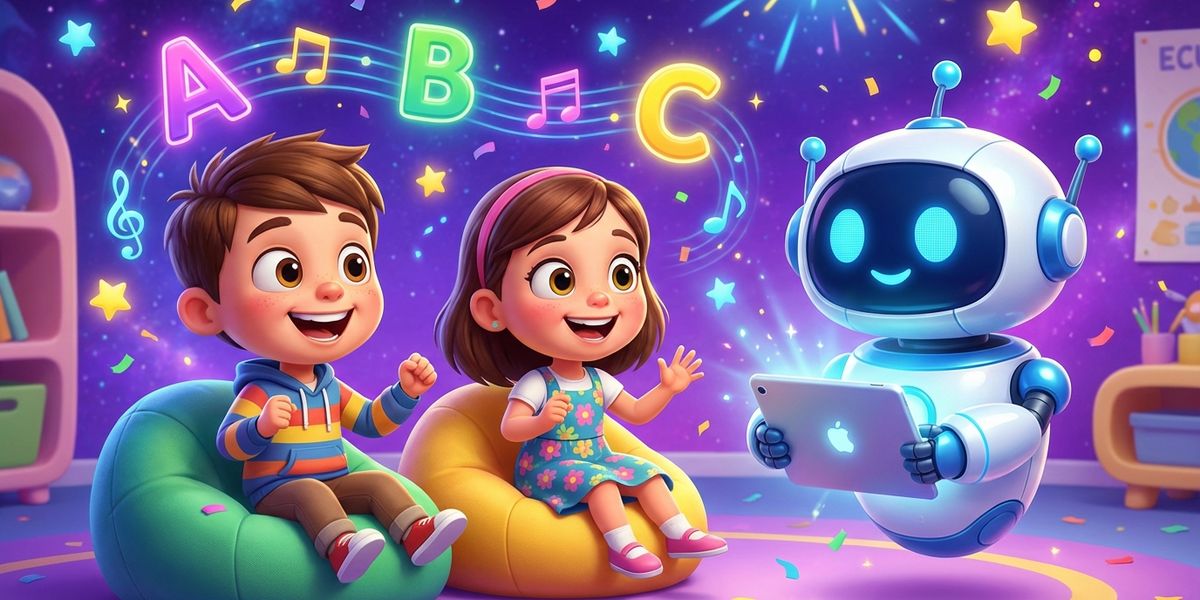
That is where games change everything. The best English speaking app for kids does not just show words. It creates a world where speaking feels like play. Your child talks to an AI avatar, earns points, and forgets they are learning. Songs and games remove the pressure.
ZetaGalaxy builds on this idea. With interactive avatars, original songs, and game-based speaking challenges, children practice real conversations. No fear. No judgment. Just play.
Why Games Are the Secret Ingredient in the Best English Speaking Apps for Kids
Kids learn by doing. When learning feels like a chore, they tune out. Games flip that switch. They turn repetition into reward.
Research from the University of Cambridge shows that gamified learning increases motivation by 60 percent compared to traditional exercises. Children spend more time engaged. They repeat phrases because they want to unlock the next level, not because someone told them to.
Games also lower the stakes. A child who hesitates to speak in class will gladly talk to a friendly avatar. There is no audience. No wrong answer. Just a game that says, try again.
Key game mechanics that work:
- Points and badges: Kids see progress instantly.
- Levels: Each completed task unlocks something new.
- Challenges: Short, timed activities keep attention.
- Rewards: Virtual prizes encourage daily practice.
Apps that use these elements consistently see higher completion rates. Children do not just start. They stick with it.
Top Features That Make an English Speaking App Effective: AI, Games, and Songs
Not every app delivers real speaking practice. Some focus on reading or listening. To build conversation skills, three features matter most.
1. AI-Powered Speaking Practice
Voice recognition has come a long way. Modern apps use AI trained on children's speech patterns. When your child says a word, the app understands even if pronunciation is not perfect. It offers gentle corrections.
Galaxy Kids and Talkie Robie both use this technology. Talkie Robie claims 100 original games and 50 songs designed specifically for speaking practice.
2. Educational Games That Teach Through Play
Games should not feel like tests. The best ones weave vocabulary into fun activities. Studycat uses badge-based progression. Kids earn rewards as they play. They learn sentence structure without realizing it.
3. Catchy Songs for Memorization
Songs stick. A child might forget a flashcard but will remember a melody. Apps that include original songs help kids internalise sentence patterns.
ZetaGalaxy combines songs with interactive avatars. Kids sing along, repeat phrases, and build confidence naturally.
Galaxy Kids offers over 2000 activities across games, songs, and AI conversations. That kind of variety keeps children engaged across different learning styles.
How Kids Go from Quiet to Chatty
Many parents notice the same pattern. Their child understands English but refuses to speak it. The gap between comprehension and conversation is real.
Game-based apps close that gap. They start with listening. Then they ask the child to repeat a single word. Next, a short phrase. Each step happens inside a game where the reward is immediate.
A 2021 study in the Journal of Educational Psychology found that children who used gamified language apps were 2.5 times more likely to initiate conversation in English compared to those who used traditional methods. The reason? Repetition without fear.
Instant pronunciation feedback also plays a role. Talkie Robie advertises real-time corrections. When a child hears almost, try again, they do not feel criticised. They feel challenged. They want to get it right.
Here is how three popular apps use games to build specific speaking skills:
Talkie Robie uses AI robot conversations to target pronunciation and sentence building. Studycat uses a badge and point system to build vocabulary and basic phrases. Galaxy Kids uses AI tutors with a CEFR curriculum to develop full conversation flow.
Safety and Screen Time: What Parents Should Know
You want your child to learn. But you also want them safe. Here is what to check before downloading any app.
Safety first:
- Choose apps with no third-party ads.
- Check privacy policies. The best apps do not sell children's data.
- Screen time guidelines: Experts recommend 10 to 15 minutes daily for preschoolers. Elementary kids can handle 15 to 25 minutes. Short, consistent sessions beat long, infrequent ones. Set a timer. Let the app be a treat, not a marathon.
- Good apps show you what your child has learned. You should see words practised, accuracy scores, and time spent. Some apps like Lingumi target specific age groups from 2 to 4 years and give parents weekly reports.
- ZetaGalaxy includes parent dashboards. You see exactly which skills your child is building. No guesswork.
Comparing the Top Apps
Every family looks for something different. Some want strict curriculum. Others want pure play. Here is how top apps stack up.
- Studycat: No AI. Focuses on badges and points. Great for young kids who love rewards. Ad-free and certified safe.
- Talkie Robie: AI friend with leaderboards. Kids compete with themselves. Over 100 games and 50 songs.
- Galaxy Kids: AI tutors follow CEFR standards. Structured lessons. Good for parents who want a clear learning path.
- ZetaGalaxy: Combines songs, games, and AI avatars. Kids choose how they want to practise. Flexible. Playful. Built for the child who learns by doing.
ZetaGalaxy stands out because it does not force a single method. If your child loves singing, they start there. If they prefer games, they jump into challenges. The AI avatars adjust. The result is an app that grows with your child.
Frequently Asked Questions
Q: What age is best to start using an English speaking app for kids?
A: Ages 2 to 10 work well. For toddlers 2 to 4, focus on songs and basic words. For ages 5 to 10, introduce AI conversation and games.
Q: How many minutes a day should kids use an English learning app?
A: Experts recommend 10 to 15 minutes daily for preschoolers. Elementary kids can do 15 to 25 minutes. Short sessions keep them excited.
Q: Is voice recognition accurate enough for children's pronunciation?
A: Yes. Advanced AI voice recognition is trained on children's speech patterns. It gives real-time feedback so kids can self-correct.
Q: Are these apps safe and ad-free for kids?
A: Top-rated apps like Studycat and Talkie Robie are ad-free and often kidSAFE listed. Always check privacy policies.
Q: Will games really help my child learn English faster?
A: Yes. Gamification increases motivation and retention. Kids using game-based apps often learn vocabulary faster than with traditional methods.